
Last Modified: July 29th, 2026
2 min read
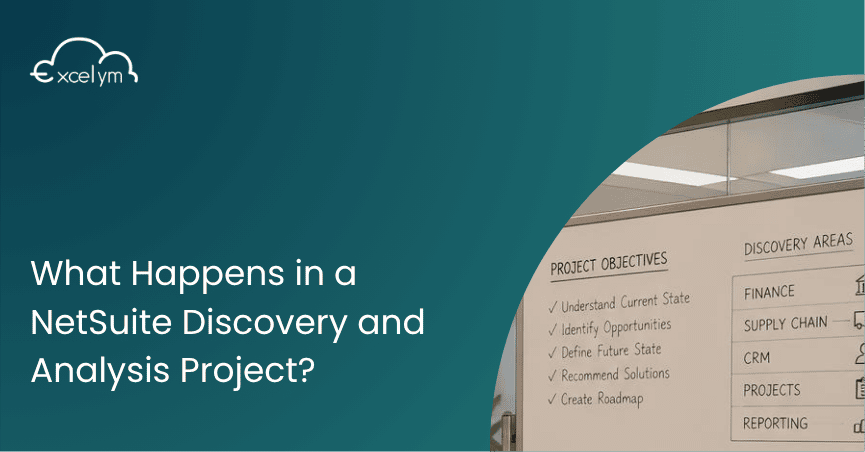
A successful NetSuite implementation doesn’t begin with configuration—it begins with Discovery. This crucial phase ensures the system you build aligns with your business model, operational workflows, and long-term strategic goals.
Discovery is where your implementation partner learns how your business actually operates and begins shaping the future-state architecture of your NetSuite environment.
Why the Discovery Phase Matters
In the Oracle NetSuite ecosystem, Discovery is designed to:
- Clarify whether your project is an implementation, re-implementation, or optimization
- Map current (“as-is”) processes and design desired (“to-be”) workflows
- Document integrations, customizations, and data requirements
- Establish project scope, timeline, and milestones
- Align functional stakeholders and technical teams early
The deliverables from Discovery form the blueprint for everything that follows.
Discovery Is a Collaborative, Ongoing Dialogue
Discovery isn’t a single kickoff meeting—it’s an iterative process involving:
- Business users
- Functional leaders
- IT and systems owners
- NetSuite consultants and solution architects
Transparency and detail during this phase dramatically reduce rework during configuration and testing, and ultimately ensure a smoother go-live.
What Happens During NetSuite Discovery?
1. Stakeholder Workshops & Process Walkthroughs
Your consultant hosts structured sessions with teams across:
- Finance & Accounting
- Sales & CRM
- Procurement & Purchasing
- Inventory & Warehouse
- Manufacturing or Projects
- Additional departments as needed
These workshops surface:
- How processes currently work
- Pain points and inefficiencies
- Manual workarounds
- Desired improvement
- KPIs and reporting needs
2. Current Systems & Data Assessment
Your NetSuite team reviews:
- Existing ERP or accounting systems
- CRM, WMS, e-commerce, BI, or other platforms
- Data quality, format, and migration readiness
- Reporting structures and data dependencies
This helps determine what must be migrated, transformed, or integrated.
3. Process Improvement & Future-State Design
With the information gathered, the team begins defining:
- What processes remain as-is
- What can be automated or standardized
- What should be redesigned using NetSuite best practices
For example, manual inventory spreadsheets may be replaced with real-time records and automated replenishment workflows.
4. Integration Requirements Definition
Integration planning is often the largest portion of Discovery.
Your consultants help define:
- Systems that exchange data with NetSuite
- What data moves, how often, and in what direction
- API or SuiteTalk integration requirements
- Workflow triggers and business rules
- Opportunities to consolidate or simplify systems
5. Scope, Timeline & Implementation Plan
The final outcome of Discovery includes:
- A detailed Functional Requirements Document (FRD)
- A phase-based project timeline
- Roles and responsibilities
- Milestones, dependencies, and risk planning
- A clear implementation roadmap
This becomes the authoritative reference through build, test, deployment, and go-live.
Benefits of a Strong Discovery Phase
A well-executed Discovery ensures:
- Accurate project scoping and budgeting
- Reduced surprises during development
- Faster configuration and testing
- Improved cross-department alignment
- A solution that scales with your business
Skipping or rushing Discovery almost always leads to timeline delays, cost overruns, and avoidable rework.
Conclusion
For any NetSuite implementation or optimization initiative, investing in a structured Discovery and Analysis phase is essential. It’s usually completed in under a month, but it sets the foundation for years of operational efficiency and platform scalability.
If you’re planning a NetSuite project and want clarity on scope, timeline, or complexity, Excelym offers a free initial consultation to help you assess your readiness and build an informed implementation strategy.

Serge is a Managing Partner and the head of sales and business development.
Published on: March 5, 2026